
The ssotme:// protocol
This explores the ssotme protocol and open source CLI.

The ssotme:// protocol
Podcast Summary: The Future of Universal Semantic Interoperability
Podcast Title: "Breaking the Syntax Barrier: A Universal Source of Truth"
Host: Dr. M
Guest: EJ
Episode Overview
In this intellectually charged episode, Dr. M sits down with EJ to unpack a radical new approach to knowledge representation and interoperability. EJ introduces the concept of a Non-Linguistic, Single Source of Truth (SSoT)—a system that acts as a "bright red line" between the WHAT (the business logic and structure) and the HOW (the implementation). The conversation dives deep into the philosophical, technical, and practical implications of this approach, questioning the very nature of language, syntax, and interoperability in modern software systems.
Key Discussion Points
The Core Idea: A Truly Universal Representation
-
EJ argues that most existing systems force knowledge into the rigid syntax of a particular language (like SQL, Python, or JSON), making them brittle and implementation-dependent.
-
Instead, EJ proposes a declarative model that corresponds directly with reality, rather than being bijectively tied to a specific syntax or programming paradigm.
Skepticism and Challenges from Dr. M
-
Dr. M challenges the notion of "non-linguistic" representation, arguing that any structured system inherently involves syntax.
-
EJ counters that syntax is different from representation—just as an apple exists outside of English, the knowledge of a system should exist outside of any single syntax.
-
The debate touches on Chomsky’s Universal Grammar and whether all structured representations inevitably form a language.
The Proof: Airtable-to-Django as a Case Study
-
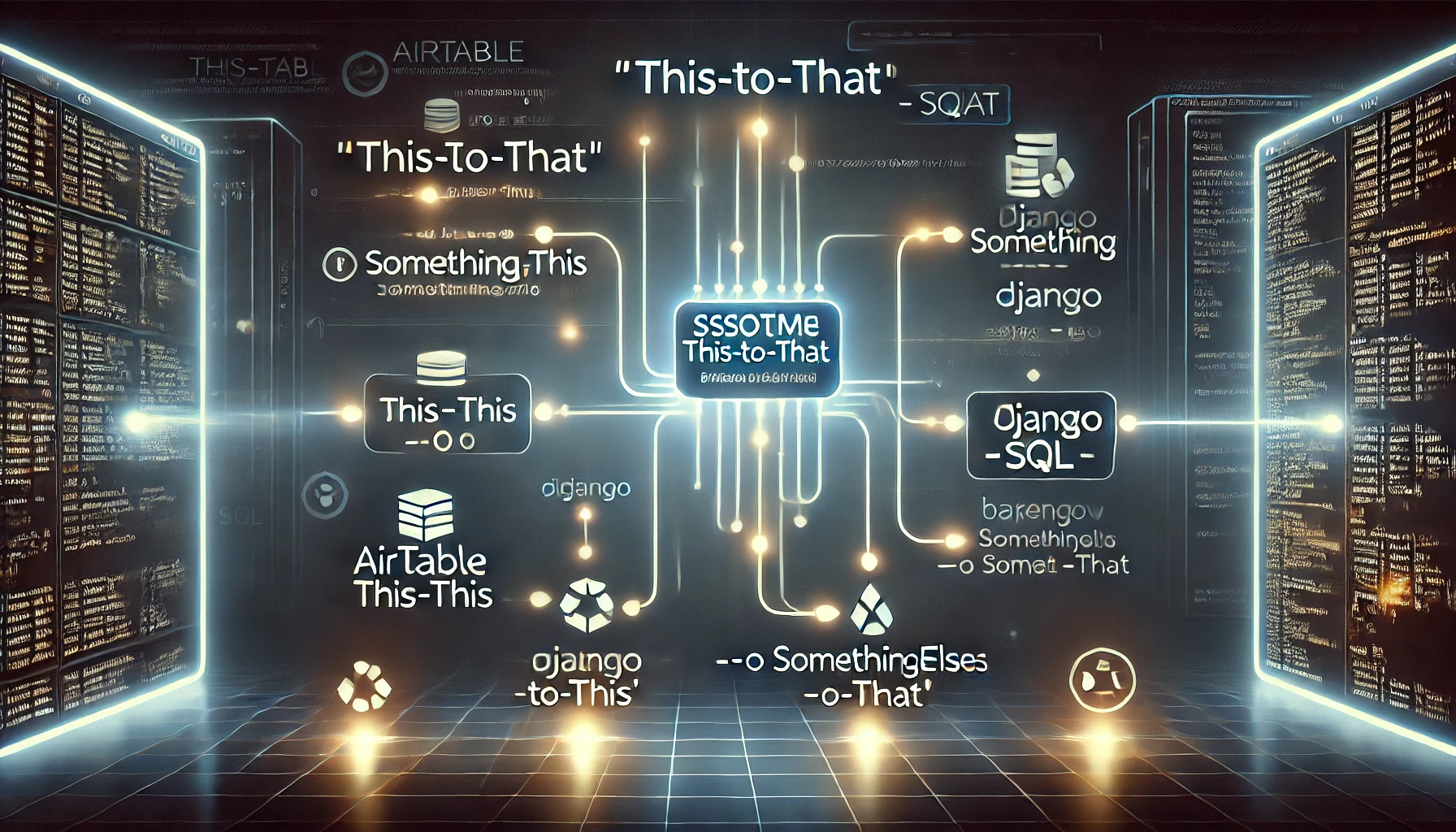
EJ presents a real-world implementation: a tool that can translate Airtable’s meta-structure into Django models, without writing explicit code.
-
Dr. M pushes back, arguing that this still requires a translation layer. EJ explains how Airtable’s Meta API, when normalized with ACID compliance, captures complete semantic fidelity.
-
The punchline: This system is so robust that it allows lossless round-trip transformations between platforms like Airtable, Baserow, SQL databases, and Django.
Introducing SSOTME: Git for Business Rules
-
EJ unveils ssotme://, an open-source protocol and CLI tool that acts like Git—but for semantic fidelity and business logic.
-
Example commands:
-
css
-
Copy
-
Edit
-
ssotme airtable-to-django -p baseId=app123xyz321
-
ssotme baserow-to-airtable -p baserowId=brApp123xyz321
-
ssotme csv-dbml-to-sql-server
-
-
Dr. M is intrigued: This isn’t just an interoperability tool—it’s a semantic execution engine that preserves constraints, business rules, and relationships across platforms.
The Missing Piece: Why OWL & RDF Aren’t Enough
-
EJ explains that existing ontology models like OWL and RDF are only 2/5ths BRCC Complete—meaning they define what things are, but not how they behave.
-
SSOTME fills this gap by ensuring semantic integrity, computed logic, and execution semantics, making it fully business-rule compliant.
Final Takeaways
-
Dr. M’s Verdict: Skepticism turns into curiosity—if SSOTME can truly break the syntax barrier, it could revolutionize how we think about knowledge interoperability.
-
EJ’s Challenge: The future isn’t about writing code—it’s about describing reality in a universal way.
-
Call to Action: Can SSOTME become the Git of semantic knowledge? EJ invites open-source contributors to help shape the next generation of syntax-free interoperability.
🔊 Listen now to challenge everything you know about data, syntax, and the future of declarative computing.